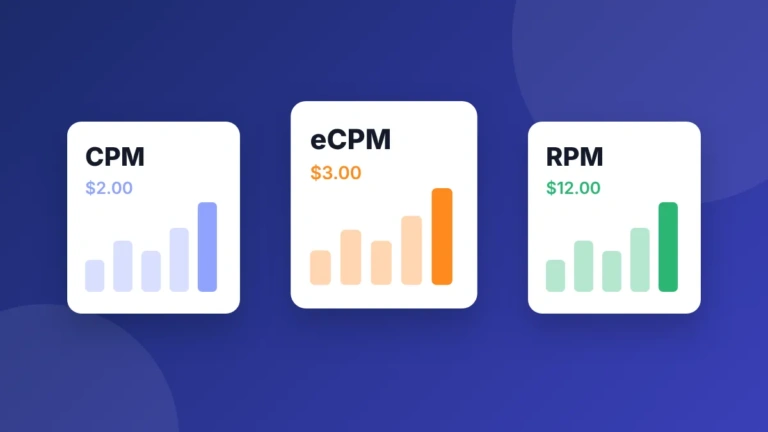


RPM is a mix of several numbers
Page RPM = ad revenue per 1,000 page views. It moves when any of these change: how much each ad sells for (CPM), how many ads load and fill per page, how many of them are actually seen, and who your visitors are. See RPM vs CPM vs eCPM for the formulas.
Common causes
| Cause | How to check | Fix |
|---|---|---|
| Seasonal CPM drop | CPMs fell across all partners, often in January or early in a quarter | Normal; wait it out, and keep floors flexible |
| Lower fill rate | Fewer paid impressions per ad request | Check timeouts, floors and bidder errors. See low fill rate |
| Lower viewability | Viewability fell after a layout or theme change | Move ads closer to content, lazy load, use sticky units |
| Traffic mix changed | More mobile, more visitors from low-CPM countries, more social traffic | Compare RPM by device, country and source |
| Ad layout changed | Fewer ads per page, or slots removed | Compare ads per page before and after the change |
| Policy or ads.txt issue | One partner's revenue dropped to almost zero | Check partner dashboards and your ads.txt |
A quick way to find the cause
- Pick two equal periods (for example, the last 14 days vs the 14 days before).
- Compare page RPM, CPM, impressions per page and viewability.
- Split by device and country. If one segment explains most of the drop, start there.
- Check what changed on the site or in your ad setup on the day the drop began.
Tools that help
Ask it anonymously. Selected questions get a full answer on bannerTag.
Ask AdOps →What viewability rate ads should have: the MRC standard, benchmarks and practical ways to raise viewability above 70%.
Why a programmatic deal ID does not spend: floors, targeting, creative sizes, deal status and seat setup, and how to check each.
DIRECT vs RESELLER in ads.txt explained: who owns the account, how it maps to sellers.json and why the right label matters.
How many SSPs a publisher should use in header bidding, by traffic size, and how to decide which partners to keep.