
Prebid.js is free. Running it well is not. Someone has to pick the bidders, keep up with new Prebid versions, set up line items in Google Ad Manager, tune timeouts and floors, handle consent and read the reports. That work is why a whole group of companies now sells Prebid as a service.
This guide explains the three ways to run Prebid, who the main self-serve platforms are, who should use them, and when it is better to build your own setup or simply use a plain wrapper.
Quick answer
- Self-serve Prebid platforms give you a no-code dashboard on top of Prebid.js and Prebid Server. You keep your own SSP accounts and your ad ops team makes the changes. Main players include Setupad, Relevant Digital, Assertive Yield, Aditude, Magnite Demand Manager, PubMatic OpenWrap and Freestar Flex.
- Use one if you have at least one ad ops person, your own SSP contracts and no spare developer time. That usually means mid-sized and large publishers.
- Use a managed partner if you have no ad ops team. They run everything and bring their own demand, for a larger share of revenue.
- Build your own only if you have engineers who will own Prebid every week, or ad revenue large enough that a few percent in fees pays for a team.
- A plain wrapper (your own Prebid.js build or a simple SSP wrapper) is enough for a small, stable setup with a few bidders and a developer you can call.
Three ways to run Prebid
A wrapper is the code that runs the header bidding auction on your page, usually a build of Prebid.js plus its settings. The question is who builds, hosts and changes that wrapper. Andrew Kraft describes three types of wrapper managers, and they match what we see in the market:
| Do it yourself | Self-serve platform | Managed (full service) | |
|---|---|---|---|
| Who runs Prebid | Your developers | Your ad ops team, in the vendor's dashboard | The partner |
| SSP accounts | Your own | Usually your own | Usually the partner's |
| Typical cost | Engineering time and hosting | SaaS fee or a few percent of revenue | A larger revenue share |
| Control | Full | High | Low to medium |
| Speed to launch | Weeks | Days | Days |
| Best for | Large publishers with engineers | Mid to large publishers with ad ops | Small and mid publishers without ad ops |
The line between the last two is blurry. Many managed partners now offer a self-serve tier, and most self-serve vendors sell support and services on top.
The main self-serve Prebid platforms
Prebid.org lists 21 managed service providers that are Prebid members. These are the best-known platforms that let publishers run Prebid themselves. Most of them do not publish full prices, so ask for a quote and compare the fee model as much as the features.
Setupad (Prebid Self-Serve)
Setupad is a Prebid company with offices in Riga and Vilnius that started as a managed partner in 2015 and launched a Prebid self-serve platform in 2024. Publishers connect their own Google Ad Manager, AdX or AdSense account and their own direct SSP contracts, then manage everything in a no-code panel: turn SSPs on or off, switch bidders between Prebid client and server, set timeouts and viewability-based ad refresh, and run A/B tests. Ad units sync with Google Ad Manager automatically, so setup takes minutes instead of weeks.
It also includes real-time Prebid analytics, monitoring of discrepancies between Google Ad Manager and SSPs, a shared blocklist across partners, identity solutions, a certified CMP and a change log you can roll back. Unlike most vendors, Setupad publishes its pricing: a free plan to start, then pay as you go with a small flat ad serving fee instead of a revenue share, and no long-term contract. If you want extra demand, you can also add Setupad's own SSP seats on a revenue share. A good fit for publishers who want to move from reseller setups to their own direct SSP relationships without hiring developers.
Relevant Digital (Relevant Yield, HB Manager)
A Nordic company whose platform is built from modules: HB Manager for Prebid, HB Analytics and reporting. HB Manager covers Prebid client and server, video, mobile apps, AMP and user IDs, and can run Amazon TAM/UAM next to Prebid. Ad ops teams add bidders, run A/B tests and set floor rules without code. Relevant Digital says it uses SaaS pricing with a fixed fee and no revenue share. Popular with publisher groups and sales houses that manage many sites.
Assertive Yield (Yield Manager)
Known first for its real-time revenue analytics, Assertive Yield now sells Yield Manager, a no-code platform with client and server-side Prebid, AI floors across Prebid, Google Ad Manager and Amazon, A/B/n testing, traffic shaping and one-click rollback. Strong choice if data and testing matter most to you. Pricing is on request.
Aditude (Cloud Wrapper)
Aditude runs Prebid as a cloud wrapper with its own Prebid Server, analytics and ad ops tools. Hashtag Labs, another wrapper company, is now part of Aditude. Aditude says onboarding takes days instead of the weeks a self-hosted setup needs.
Magnite Demand Manager
Magnite, the largest independent SSP, offers Prebid as a service for display and video on web and apps, with a UI and support from Prebid experts. In 2024 it added AI-driven automation that tunes the wrapper for you.
PubMatic OpenWrap
PubMatic's OpenWrap is an enterprise wrapper based on Prebid.js and Prebid Server. Partners are managed in a cloud interface without code changes, with reporting and dedicated support teams. It also covers apps and CTV.
Freestar Flex
Freestar is best known as a managed partner. Freestar Flex, launched in 2025, is the self-managed version: you set floors, timeouts and bidders yourself or let its machine learning do it. Note that Stagwell, an agency group, announced it is buying Freestar in October 2026, so ask how that changes the product and data use.
Others worth a look
- Media.net also offers a wrapper for larger publishers, and Spiny.ai is another self-service wrapper manager.
- Livewrapped, Mile, Opti Digital, AdPushup, Adapex and The Publisher Desk sit between self-serve and managed, often with a mix of software and service.
- AdGrid sells a SaaS wrapper with a flat subscription and no revenue share, aimed at smaller teams.
A note on SSP-owned wrappers
Magnite and PubMatic are also SSPs that bid in your auction. Both say their wrappers are neutral, and many large publishers use them. Still, check three things: that every bidder gets the same timeout and treatment, that you can see bid-level data for all partners, and that you can move your setup elsewhere if you leave.
Managed partners, for comparison
If you do not have an ad ops team, a managed partner usually makes more sense than a self-serve tool. They use their own SSP seats, run the wrapper and often sell direct deals too. Typical entry levels, as listed in MonetizeMore's 2026 comparison (a competitor in this space, so check with each company):
| Partner | Model | Typical minimum |
|---|---|---|
| Playwire | Managed, with a self-service option | About 500,000 pageviews a month |
| Publift | Managed, or Fuse Enterprise self-serve | About $2,000 ad revenue or 500,000 pageviews a month |
| Freestar | Managed, plus Flex self-serve | About 1 million pageviews a month |
| MonetizeMore (PubGuru) | Managed or publisher-run | $5,000 revenue or 2 million pageviews for the premium tier |
| Ezoic | Self-serve ad platform with header bidding mediation | 250,000 monthly users for new sign ups since February 2026 |
Raptive and Mediavine are also full-service, mostly for lifestyle and blog publishers. Not sure which type you need? Try our free Monetization Partner Finder.
Who should use a self-serve platform?
A self-serve platform is the right choice when most of these are true:
- You have at least one person who works on ad ops or programmatic every day.
- You have, or want, direct contracts with SSPs, so the money and the data stay with you.
- You change your setup often: new bidders, tests, floors, new sites or apps.
- Your developers are busy with the product and should not be asked to edit Prebid config every week.
- Your ad revenue is large enough that a few percent of extra yield pays the fee. In practice that often starts at tens of thousands of dollars a month in programmatic revenue.
It is the wrong choice if nobody on your side will log in and use it. A self-serve tool without an owner is the most expensive way to run Prebid.
When to build your own
Large publishers such as Axel Springer, Condé Nast and Ziff Davis run their own Prebid setups. Axel Springer moved from a managed server-side service that charged a revenue fee to its own Prebid Server on AWS. Revenue matched or beat the old setup from the start at a similar infrastructure cost, and later changes cut bidder timeouts from 8-12% to under 2% (AWS case study).
Building your own makes sense when:
- You have engineers who will own Prebid long term, not just set it up once.
- You need custom things vendors will not build: your own modules, adapters, auction logic or consent flow.
- Your revenue is so large that a 3-10% fee is more than the cost of a small team.
- You want full control of data and no dependency on any vendor.
Count the real cost. Prebid releases a new version almost every week and a major version about once a year (see our Prebid history timeline). Bid adapters are added and removed all the time (our analysis). You also need line items in Google Ad Manager, consent for TCF and GPP, user ID modules, analytics and, for server-side, hosting Prebid Server. Aditude estimates that 20% of a $100,000 engineer's time costs $20,000 a year, and that is before analytics and hosting.
When a plain wrapper is enough
You do not always need a platform. A plain Prebid.js build with a few bidders, or the free wrapper an SSP gives you, works well when:
- You run one or a few sites with a simple layout.
- You work with three to six bidders and rarely change them.
- A developer can update Prebid a few times a year.
- You track results in Google Ad Manager and with a free Prebid analytics adapter.
Before you set it up, use our timeout calculator and price granularity calculator to get the basics right, and debug the live page with the free Professor Prebid extension.
A simple cost check
Compare the options on one number: what you pay per year against what you expect to earn extra. An example with made-up numbers for a publisher with $40,000 a month in programmatic revenue:
| Option | Yearly cost (example) | What you get |
|---|---|---|
| Managed partner at 20% revenue share | $96,000 | No work, their demand and contracts |
| Self-serve platform at 5% of revenue | $24,000 | Dashboard, analytics, your own SSP deals, needs an ad ops person |
| Self-serve SaaS with a fixed fee | Fixed, ask for a quote | Same, cost does not grow with revenue |
| Do it yourself | Engineering time plus hosting, often $20,000 or more | Full control, slowest to change |
The cheapest option on paper is not always the best. If a managed partner brings demand you cannot get yourself, its higher fee can still leave you with more money. Test with a part of your traffic before you switch everything.
Questions to ask any Prebid vendor
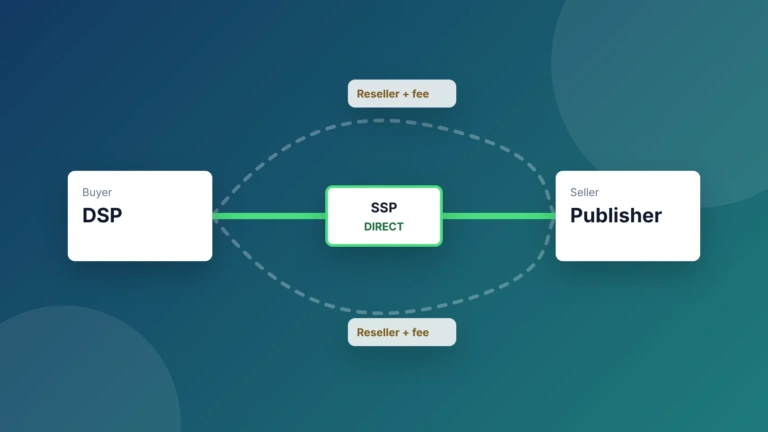
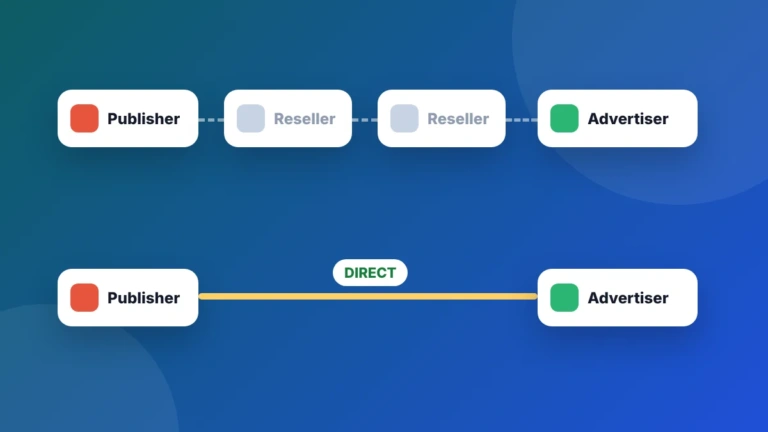
- Whose SSP accounts are used? With your own seats you are listed as DIRECT in each SSP's sellers.json. With theirs you are a RESELLER line in ads.txt, and buyers who cut supply paths may bid less. Check with our sellers.json lookup.
- How is the fee charged? Fixed SaaS, percentage of all revenue, or only of revenue that goes through their demand?
- How fast do you update Prebid? Ask which Prebid.js version they run today.
- Do I get bid-level data? Every bid, every partner, not only winners.
- Who hosts Prebid Server, and where? Latency and data rules depend on the region.
- Can I export my setup if I leave? And how long is the contract?
- Are all bidders treated the same? Especially if the vendor is also an SSP.
FAQ
Which Prebid self-serve platforms publish their prices?
Most vendors only give prices on request. Setupad publishes its plans, with a free plan and a flat ad serving fee, and Relevant Digital and AdGrid say they charge fixed SaaS fees without a revenue share.
What is a Prebid self-serve platform?
A software platform that lets your own team run Prebid.js and Prebid Server through a dashboard instead of editing code: adding bidders, setting timeouts and floors, running tests and reading reports. You usually keep your own SSP accounts.
What is the difference between a wrapper and a self-serve platform?
The wrapper is the code that runs the auction on the page, usually Prebid.js. A self-serve platform adds the tools around it: a no-code interface, hosting, Prebid Server, analytics, A/B tests and floor optimization.
How much do Prebid self-serve platforms cost?
Most do not publish prices. Some charge a fixed SaaS fee, others a few percent of revenue. Managed partners usually take a larger revenue share because they also bring demand and do the work.
Is it worth building Prebid in-house?
Only if you have engineers who will maintain it all year and revenue large enough that saved fees pay for them. For most mid-sized publishers, a self-serve platform or a managed partner is cheaper in total.
Can a small website use Prebid?
Yes, but the gains are small with low traffic and the setup takes time. Below a few hundred thousand pageviews a month, AdSense or a managed partner is usually the better start. Our ad revenue calculator shows what header bidding could add.