
Almost every publisher that runs header bidding uses Prebid, directly or through a wrapper. But Prebid in 2026 is very different from the script that launched in 2015. This article walks through the history of Prebid, version by version, and looks at what is likely to come next.
Before Prebid: the waterfall
Before header bidding, ad servers asked demand partners one by one in a fixed order, called the waterfall. The first partner that met the price won, even if a partner further down would have paid more. Early header bidding fixed this by asking everyone at once, but each exchange had its own code, and publishers had to stitch the tags together by hand. Prebid turned that into one open-source library.
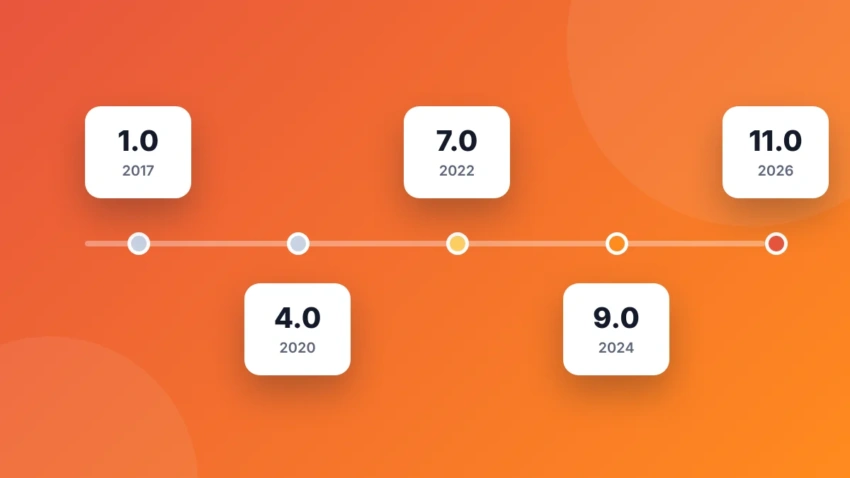
Timeline: Prebid from 2015 to 2026
| When | Milestone |
|---|---|
| 2015 | Prebid.js is written at AppNexus, with help from the publisher Aplus, and released as open source |
| 2017 | AppNexus launches Prebid Server, a free server-side version of the auction |
| 11 September 2017 | Prebid.org launches as an independent organization, with 81 demand partners and 191 contributors |
| 13 December 2017 | Prebid.js 1.0: one code base for banner, video and native ads |
| February 2018 | Prebid Server supports Google AMP pages |
| 2019 | Prebid.js 2.0 and 3.0: User ID module, supply chain (schain) module, US privacy (CCPA) support |
| 2020 | Prebid.js 4.0: TCF 2 consent enforced by default when enabled, price floors and GPT pre-auction mature |
| 2021 | Prebid.js 5.0, then 6.0 in October: Internet Explorer 11 support dropped, modern JavaScript allowed |
| June 2022 | Prebid.js 7.0: FLoC and TCF 1 removed, first-party data moves to ortb2, bidders need permission for device storage |
| June 2023 | Prebid.js 8.0: transaction IDs become opt-in, activity controls for privacy |
| 2024 | Prebid.js 9.0: Fledge renamed PAAPI, consent modules renamed to TCF Consent and TCF Control, ortb2 required for site and device data |
| July 2025 | Prebid.js 10.0: TypeScript enters the code base, modern browsers only, gpid replaces pbadslot |
| August–October 2025 | Bidder-specific transaction IDs spark a dispute; The Trade Desk releases its own fork, OpenAds |
| Early 2026 | Prebid.js 11.0: PAAPI and video ad pods removed, strict storage control by default, new viewability tools |
| January 2026 | Amazon Publisher Services opens a Prebid adapter in beta; Prebid takes over an open-source AI sales agent project |
| April 2026 | Microsoft’s free public Prebid Cache is retired |
| September 2026 | A US court orders Google to connect AdX and its ad server to Prebid; Garrett McGrath becomes Prebid’s second president |
Dates and details come from Prebid’s release history, Prebid’s announcements for 6.0 and 7.0, and PPC Land’s Prebid explainer.
The major versions in more detail
Prebid.js 1.0 (2017): one library for every format
Version 1.0 arrived three months after Prebid.org was founded. It gave publishers one stable API for banner, video and native ads, and it became the base most wrappers were built on.
Prebid.js 2.x and 3.x (2019): identity and transparency
The User ID module let publishers pass shared user IDs to bidders, which became important as third-party cookies declined. The supply chain (schain) module showed buyers every company in the selling path, and new consent modules handled the California privacy law. Version 3 added first-party data conventions and the first support for TCF 2 consent strings.
Prebid.js 4.x (2020): privacy by default
Version 4 enforced TCF 2 purposes by default when the TCF Control module was used, so bidders without consent could not read cookies. The price floors module gave publishers dynamic floors, and the GPT pre-auction module improved how Prebid works with Google Ad Manager. Multi-bid support and better Prebid Server integration followed during 4.x.
Prebid.js 5.x and 6.x (2021): modern JavaScript
Version 6 dropped Internet Explorer 11, which let developers use modern JavaScript features such as promises and made the code faster and smaller. Publishers who still needed IE11 had to keep serving version 5.
Prebid.js 7.x (2022): first-party data and storage rules
Version 7 removed the FLoC module and the old TCF 1 support. First-party data moved into the standard OpenRTB (ortb2) object, and bidders lost access to device storage unless the publisher allowed it.
Prebid.js 8.x (2023): control over identifiers
Version 8 made transaction IDs opt-in and introduced activity controls, a single way for publishers to decide which modules may do what, such as syncing users or reading storage. It also cleaned out many old modules.
Prebid.js 9.x (2024): Privacy Sandbox and stricter config
Version 9 renamed Google’s Fledge integration to PAAPI (Protected Audience API) and removed older consent formats. Site, app and device settings now had to go through ortb2, and building Prebid required Node.js 20.
Prebid.js 10.x (2025): TypeScript and modern browsers
Version 10 started the move to TypeScript and targeted modern browsers only, as described in the 10.0 release notes. It also treated the supply chain as first-party data and replaced the pbadslot field with gpid. During 10.x, a change to transaction IDs caused one of Prebid’s biggest public disputes.
Prebid.js 11.x (2026): after the Privacy Sandbox
Version 11 removed PAAPI and video ad pod support after Google stepped back from parts of the Privacy Sandbox. According to the 11.0 release notes, storage control is now strict by default, bids with the wrong media type are rejected, and new viewability features link ad units to page elements. TypeScript is now preferred for new modules.
Beyond Prebid.js
- Prebid Server runs the auction on a server instead of in the browser. It powers AMP pages, apps and connected TV, and keeps pages fast when you have many bidders. See server-side header bidding explained.
- Prebid Mobile brings the same auction to iOS and Android apps.
- Prebid for video supports instream and outstream video, and Prebid Server is used for connected TV.
Turning points and controversies
Prebid grew from a tool into infrastructure, and that brought tension. In 2025 Prebid gave each bidder its own transaction ID, which buyers said broke the OpenRTB standard. AdExchanger described Prebid as being at a crossroads: should it stay focused on publishers, or represent buyers too? The Trade Desk answered by releasing its own fork, OpenAds. Prebid says it remains publisher-first.
What to expect next
- Google AdX inside Prebid. The antitrust remedies require an AdX adapter for Prebid, likely within 6 to 12 months of the judgment taking effect. That would make Prebid the place where nearly all open-web demand competes. Read the Google ad tech antitrust case explained.
- More server-side auctions. To keep pages fast with more demand, expect more publishers to move bidders into Prebid Server.
- AI and agent-driven selling. Prebid now looks after an open-source sales agent for automated direct deals, and new modules let AI tools read auction data. Direct deals could become easier to sell without a large sales team.
- Privacy without the Sandbox. With PAAPI gone, focus shifts to consent, shared IDs, first-party data and strict storage rules.
- Governance questions. Prebid’s relationship with the IAB Tech Lab and with big buyers will keep shaping its rules.
- Prebid 12. Based on the yearly rhythm, the next major version is likely in 2027, with more TypeScript and more old modules removed.
What this means for publishers
- Stay current. Old versions lose bidder support and privacy features. Upgrade at least once a year and test on part of your traffic.
- Own your setup. Managed wrappers are shrinking, so make sure you control your Prebid configuration. See reseller to direct.
- Watch your timeout and bidders. More demand means more latency. Check yours with the header bidding timeout calculator.
- New to Prebid? Start with the Prebid.js setup guide.
Frequently asked questions
Who created Prebid.js?
Prebid.js was written at AppNexus in 2015, with help from the publisher Aplus. It was open source from the start and moved to the independent Prebid.org organization in 2017.
What is the latest version of Prebid.js?
Version 11 is the current major release in 2026, and the 11.x line receives regular minor updates. Check Prebid’s release notes for the exact latest number before upgrading.
How often does Prebid release a new major version?
Roughly once a year in recent years: 7.0 in 2022, 8.0 in 2023, 9.0 in 2024, 10.0 in 2025 and 11.0 in 2026. Minor versions come out almost every week.
Should I always use the latest Prebid version?
Stay on a recent version, because old ones lose bidder support and privacy features. Test a new major version on part of your traffic first, as major releases remove modules and change settings.
Will Google AdX work with Prebid?
Yes. The 2026 US antitrust remedies require Google to build an adapter so AdX can bid inside Prebid. The deadline is still being set, with proposals of 6 or 12 months after the judgment takes effect.
What was the Prebid transaction ID dispute?
In August 2025 Prebid 10.9 started giving each bidder its own transaction ID. Buyers like The Trade Desk objected, and The Trade Desk created its own fork called OpenAds. Prebid later let publishers choose which SSPs receive shared IDs.
Conclusion
In ten years Prebid went from a clever script to the backbone of open-web advertising. Each major version made it more private, more modern and more publisher-controlled, and the Google ruling may make it more central than ever. The next chapter is about server-side auctions, AI-assisted selling and finally competing with Google on equal terms.