
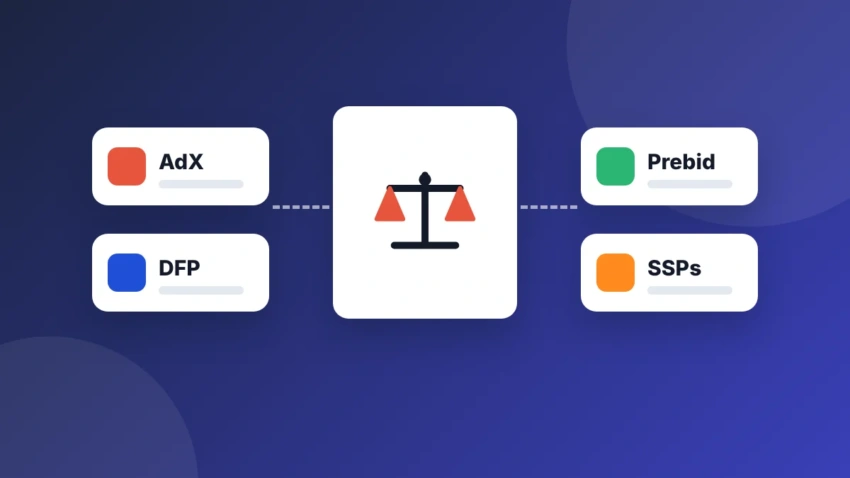
The Google ad tech antitrust case is the biggest legal fight in programmatic advertising so far. It decides how the tools that sell most of the open web’s display ads must work, and it affects every publisher that uses Google Ad Manager. Here is what the court found, what Google must change, what didn’t change, and what it means for your ad revenue.
Timeline of the case
| Date | What happened |
|---|---|
| January 2023 | The US Department of Justice and several states sue Google over its ad tech business |
| September 2024 | Liability trial in the Eastern District of Virginia, Judge Leonie Brinkema |
| 17 April 2025 | Court finds Google illegally monopolized two ad tech markets and tied DFP to AdX |
| September 2025 | European Commission fines Google €2.95 billion in a parallel EU case |
| Autumn 2025 | Remedies trial: the DOJ asks for a sale of AdX, Google proposes behavioral changes |
| 2 September 2026 | Remedies decision: no sale of AdX, behavioral remedies instead |
| 15 September 2026 | The full 106-page opinion is made public |
| 2 October 2026 | Google and the government file a joint proposed final judgment, with disputed parts |
| Next | Court enters the final judgment; remedies start 60 days later; Google is expected to appeal |
What the court found in 2025
In April 2025 Judge Brinkema ruled that Google had monopolized two markets, according to the Simpson Thacher summary of the ruling:
- Publisher ad servers: Google’s DoubleClick for Publishers (DFP, now part of Google Ad Manager) had about 91% of the worldwide market.
- Ad exchanges: Google’s AdX had an estimated 55% to 65% share, many times more than its nearest rival.
- Tying: Google unlawfully tied DFP and AdX together, so publishers who wanted AdX demand had to use DFP.
The court pointed to specific auction rules that favored AdX:
| Rule | What it did |
|---|---|
| First Look | Let AdX win an impression before rival exchanges’ bids were considered |
| Last Look | Let AdX see the best rival bid and then beat it |
| Unified pricing rules | Stopped publishers from setting a higher floor for AdX than for other exchanges |
Google won one part: the court did not accept that it monopolized a separate market for advertiser ad networks through Google Ads.
What Google must change
The September 2026 decision accepted most of the government’s behavioral remedies. Based on the AdExchanger summary and the proposed final judgment, Google must:
| Change | What it means for publishers | Deadline (proposed) |
|---|---|---|
| AdX adapter for Prebid | AdX can bid inside your Prebid auction like any other SSP | 6 months (DOJ) or 12 months (Google) |
| AdX bids to rival ad servers | You can use AdX demand without using Google’s ad server | 6 or 12 months |
| DFP connection to Prebid Server | Better integration of server-side header bidding with Ad Manager | 12 months |
| Data export from DFP and AdX | You can take your auction data to other tools | 3 months |
| No First Look or Last Look | AdX competes on the same terms as other exchanges | Must not be reintroduced |
| Unified pricing rules removed | You can set different floor prices per exchange | Must be deprecated |
| Google Ads limits | Google Ads can’t bid directly into DFP or favor AdX, except to improve advertiser results | From the effective date |
| Technical monitor | A monitor and technical committee check compliance, with access to systems and code | 6 years |
The rules apply to open-web display advertising sold through indirect (programmatic) demand. AdSense, AdMob and DV360 are not covered. Both sides agree the judgment lasts six years. Google wants up to 24 months to roll the changes out outside the US, while the government wants them worldwide from the start.
What did not change
- No breakup. Google keeps AdX and DFP.
- No open-source auction. The request to open-source DFP’s auction logic was rejected. Google must publish technical documentation instead.
- No fee cap. The court did not limit AdX’s take rate, although more competition may push fees down.
- Not final yet. The final judgment still has to be entered, and Google plans to appeal the liability ruling.
The parallel case in Europe
In September 2025 the European Commission fined Google €2.95 billion for favoring its own ad tech. Its preliminary view was that only selling part of the business would fully solve the conflict of interest. Google offered behavioral changes instead, including letting publishers set different floor prices per bidder. As The Next Web reports, the Commission was still assessing that offer in late 2026, so Europe could still demand more than the US.
What it means for publishers
If you use AdSense
Very little changes directly, because AdSense is outside the judgment. If competition among exchanges grows, rates across the market could improve over time. See AdSense CPM rates 2026.
If you use Google Ad Manager with header bidding
- Review your floors. Without unified pricing rules you can set different floors for AdX and other exchanges. Test this carefully, because higher floors can also lower fill rate.
- Plan for AdX in Prebid. When the adapter arrives, you can run AdX as a normal bidder inside Prebid. That makes the auction more transparent and easier to compare. Our Prebid.js setup guide explains the basics.
- Watch latency. More bidders in the browser means more waiting. Check your settings with the header bidding timeout calculator.
- Export your data. Use the new data export options to compare demand sources outside Google’s reports.
If you are a larger publisher
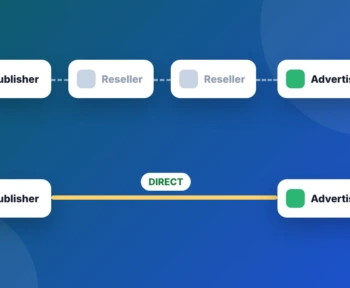
The ruling makes a fully independent setup more realistic: your own Google Ad Manager account, direct contracts with SSPs, and AdX as one bidder among many. That shift from reseller setups to direct relationships is likely to speed up. Read our guide on moving from reseller to direct. Start by checking who sells your inventory today with the ads.txt checker, and read Google Open Bidding explained to see how Google’s own server-side auction compares.
What to watch next
- The date the court enters the final judgment, which starts the 60-day clock.
- Whether Google asks for a stay while it appeals, which could delay the changes.
- Which deadline the court picks for the AdX adapter for Prebid: 6 or 12 months.
- Who is appointed as the technical monitor.
- The European Commission’s decision on Google’s offer, which could go further than the US ruling.
Frequently asked questions
Did Google have to sell AdX?
No. In September 2026 Judge Leonie Brinkema rejected the request to force a sale of Google’s ad exchange (AdX) or its publisher ad server (DFP). Instead, she ordered behavioral remedies: rules on how Google’s tools must work with competitors, overseen by a court-appointed monitor for six years.
When do the changes take effect?
Sixty days after the court enters the final judgment. The parties filed a proposed judgment on 2 October 2026. Individual changes then have their own deadlines, for example 12 months for the DFP to Prebid Server connection. The deadline for the AdX adapter for Prebid is disputed: the government wants 6 months, Google wants 12.
Does the ruling affect AdSense?
Not directly. The final judgment covers Google Ad Manager (DFP and AdX) and Google Ads. AdSense, AdMob and DV360 are excluded. AdSense publishers may still benefit indirectly if competition lowers fees across the market.
What are unified pricing rules and why do they matter?
Unified pricing rules stopped publishers in Google Ad Manager from setting a higher floor price for AdX than for other exchanges. Removing them lets you set different floors for different demand sources, which gives you more control over your auction.
Will Google appeal?
Google has said it will appeal the 2025 liability ruling. An appeal could delay parts of the remedies if the court grants a stay, so the timeline is not final yet.
What happened in the European Union?
In September 2025 the European Commission fined Google €2.95 billion for favoring its own ad tech services. The Commission said a sale of part of the business may be needed. Google offered behavioral changes instead, and the Commission was still assessing them in late 2026.
Conclusion
The Google ad tech antitrust case ends without a breakup: Google keeps its ad tech business, but the rules of the auction are changing. AdX loses its special advantages, has to work with Prebid and rival ad servers, and Google will be watched for six years. For publishers this means more control and more choice over the next one to two years. Keep an eye on the final judgment and the appeal, and start preparing your setup now.
This article reflects public reporting as of November 2026. It is not legal advice.