Everyone in online advertising uses the word “programmatic”. However, few people explain it in plain language. Here is a short programmatic definition: programmatic advertising is the automated buying and selling of ad space with software. In other words, machines do the trading instead of people who send emails and sign orders. Below we explain the term step by step.
A simple programmatic definition
The programmatic definition has three parts. First, the trade is automated. Second, it uses data to decide which ad to show. Third, it happens for each single impression. An impression is one ad shown to one visitor.
Before programmatic, a publisher sold ad space by hand. For example, a sales person agreed on a price for one million views with a brand. Then someone uploaded the banner. This process took days. Now software does the same job in less than a second, and it does it for every page view.
How programmatic advertising works
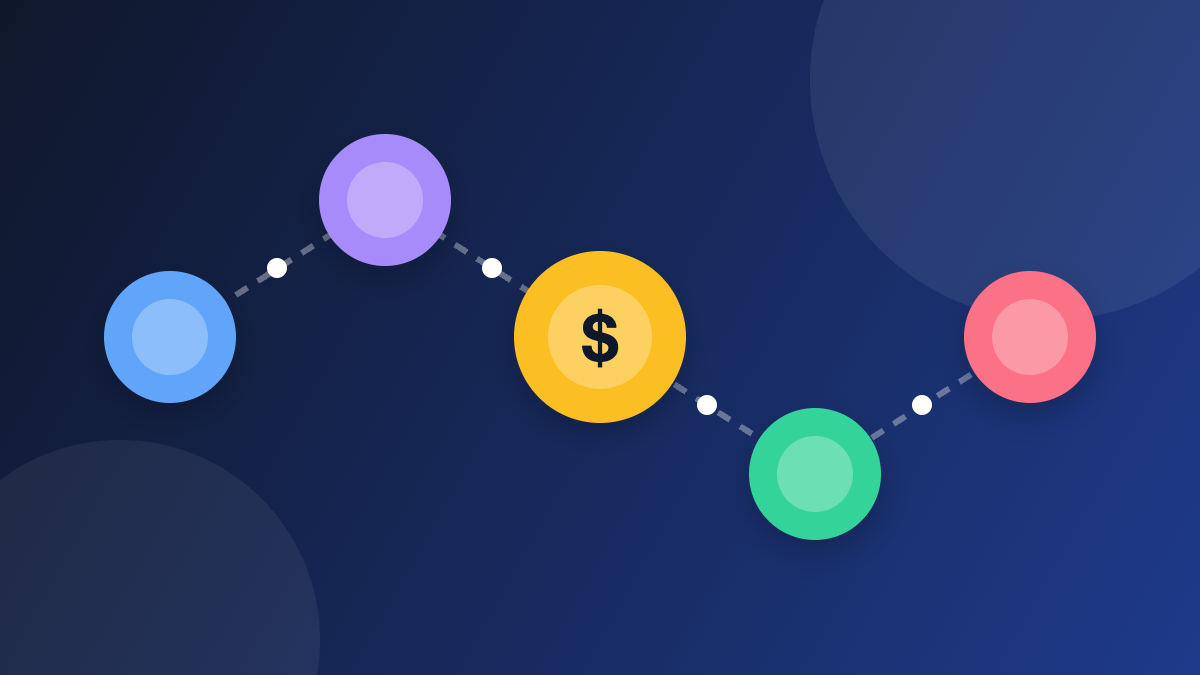
Most programmatic ads are sold in a real time auction. This is called real time bidding, or RTB. The steps are easy to follow.
- First, a visitor opens a web page with an ad slot.
- Next, the website sends a request to an ad exchange through its SSP.
- Then the exchange asks many buyers how much they want to pay.
- After that, each buyer’s DSP answers with a bid.
- Finally, the highest bid wins and the ad appears on the page.
All of this happens while the page loads. Therefore the visitor does not notice anything.
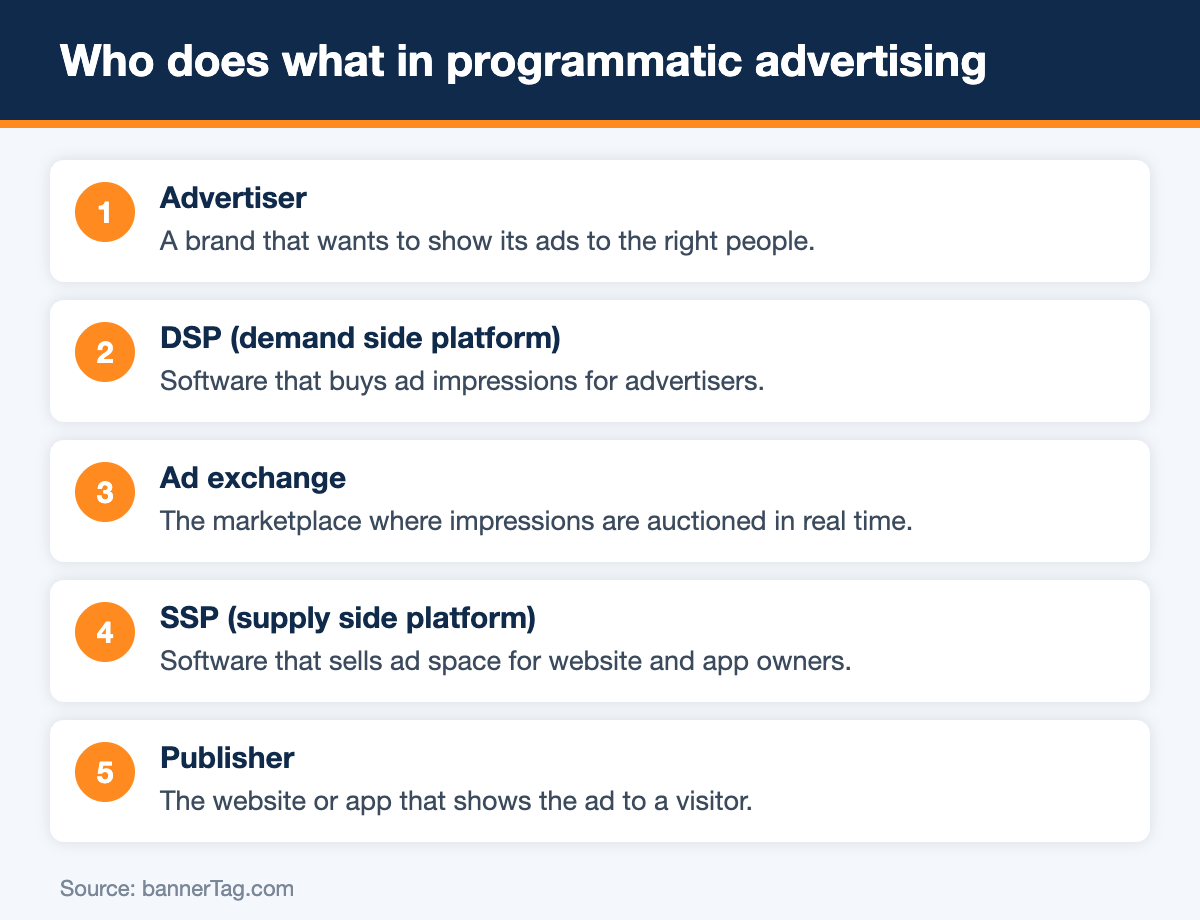
Key terms behind the programmatic definition
To understand the programmatic definition fully, you need a few more words.
- DSP. A demand side platform. Advertisers use it to buy ads.
- SSP. A supply side platform. Publishers use it to sell ad space.
- Ad exchange. The marketplace that connects both sides.
- Ad server. The tool that decides which ad is finally shown.
- CPM. The price for one thousand impressions. See our guide on how to calculate CPM and CTR.
In addition, you can find our list of SSP and DSP partners useful.
Types of programmatic deals
Programmatic is not only an open auction. In fact, there are four common deal types.
- Open auction. Any buyer can bid. This is the most common type.
- Private marketplace. Only invited buyers can bid, usually for a higher price.
- Preferred deal. One buyer gets the first look at a fixed price.
- Programmatic guaranteed. A fixed price and a fixed number of impressions, but without the paperwork.
Why programmatic matters for publishers
Programmatic gives even a small website access to thousands of advertisers. Moreover, every impression is sold to the buyer who values it the most. As a result, publishers earn more than with one fixed network.
Most publishers start with Google AdSense, which is also programmatic. Later, many of them add header bidding. With header bidding, several exchanges compete at the same time, so prices go up.
Advantages and disadvantages
Programmatic has clear benefits. Still, it is not perfect.
- Efficiency. Software replaces slow manual work.
- Targeting. Advertisers reach the right audience, so they pay more.
- Scale. One setup reaches buyers from all over the world.
- Complexity. On the other hand, there are many companies between the advertiser and the website, and each one takes a fee.
- Fraud and quality. Because the chain is long, bad actors can hide in it. For this reason, standards such as ads.txt were created by the IAB Tech Lab.
What comes next
Programmatic keeps changing. For example, privacy rules limit how user data can be used. Meanwhile, AI agents begin to plan and buy campaigns on their own. You can read more about it in our article on agentic advertising.
Conclusion
To sum up, programmatic means that software buys and sells ads automatically, one impression at a time. It is faster than manual sales and it usually pays better. If you run a website with ads, you already use programmatic in some form. Therefore it is worth understanding the basics.